
Table of Contents
How to Clean Your Kitchen Chimney: Complete Cleaning Guide
Introduction
A kitchen chimney is one of the most important appliances in a modern home. It helps remove smoke, grease, steam, odors, and airborne particles generated during cooking, keeping your kitchen cleaner and more comfortable. However, many homeowners overlook one essential aspect of chimney ownership—regular cleaning.
Every time you cook, especially when frying or preparing oily foods, grease particles travel through the chimney. Over time, these particles stick to the filters, motor housing, fan blades, and inner surfaces. If not cleaned regularly, this buildup can reduce suction power, create unpleasant odors, increase noise levels, and even shorten the lifespan of the chimney.
Fortunately, routine maintenance doesn’t have to be difficult. With the right tools and techniques, many cleaning tasks can be done safely at home. In this guide, you’ll learn how to clean different types of kitchen chimneys, maintain peak performance, and identify situations where professional servicing is the better option.
Whether you own a mesh filter chimney, baffle filter chimney, or filterless auto-clean chimney, this guide will help you keep it running efficiently.
Why Kitchen Chimney Cleaning Is Important
Many homeowners assume that because the chimney removes smoke, it also cleans itself. In reality, only the air passes through the exhaust system. Grease, oil droplets, and food residue gradually collect inside the appliance.
Ignoring regular cleaning can lead to several issues:
Reduced Suction Power
When filters become clogged with grease, airflow is restricted. This means smoke and cooking odors remain in your kitchen instead of being extracted efficiently.
Increased Power Consumption
A dirty chimney forces the motor to work harder to maintain airflow. Over time, this can increase electricity usage and place unnecessary strain on internal components.
Unpleasant Kitchen Odors
Grease deposits absorb cooking smells. As they accumulate, they can produce stale or unpleasant odors even when you’re not cooking.
Fire Hazard
Heavy grease buildup is flammable. Although modern chimneys are designed with safety features, excessive grease accumulation can increase fire risk, especially in high-use kitchens.
Shorter Appliance Lifespan
A clean chimney experiences less strain on the motor, fan, and electrical components, helping it operate efficiently for many years.
How Does a Kitchen Chimney Work?
Understanding how your chimney works makes it easier to maintain.
A kitchen chimney typically consists of:
- Filters
- Motor
- Fan or blower
- Oil collector (for auto-clean models)
- LED lights
- Control panel
- Exhaust duct (for ducted models)
When you cook, the motor pulls in smoke, steam, grease particles, and odors through the filters. The filters trap grease while cleaner air is either expelled outside through a duct or recirculated after additional filtration, depending on the chimney type.
Over time, grease accumulates on the filters and internal surfaces, which is why regular cleaning is essential.
Benefits of Regular Kitchen Chimney Cleaning
Cleaning your chimney consistently offers several advantages:
Better Air Quality
Removing grease and residue improves airflow, helping eliminate smoke, steam, and odors more effectively.
Improved Suction Performance
Clean filters allow the motor to operate efficiently, maintaining strong suction during cooking.
Lower Maintenance Costs
Routine cleaning can prevent grease-related problems that may otherwise require costly repairs.
Longer Appliance Life
Regular maintenance reduces wear on the motor and fan, extending the overall lifespan of the chimney.
Cleaner Kitchen
An efficient chimney minimizes grease deposits on cabinets, walls, countertops, and ceilings, reducing the amount of cleaning needed throughout your kitchen.
How Often Should You Clean Your Kitchen Chimney?
The ideal cleaning schedule depends on how frequently you cook and the type of food you prepare.
| Cooking Frequency | Recommended Cleaning |
|---|---|
| Light Cooking (1–2 times daily) | Every 2–3 months |
| Moderate Cooking | Every 1–2 months |
| Heavy Cooking | Every month |
| Commercial Kitchens | Every 2–4 weeks |
If your meals frequently involve deep frying, grilling, or heavy use of oil and spices, your chimney will require more frequent cleaning.
Tools You’ll Need Before Cleaning
Before you begin, gather the following items:
- Rubber gloves
- Soft microfiber cloth
- Soft sponge
- Non-abrasive scrub pad
- Mild liquid detergent
- Kitchen degreaser
- Baking soda
- White vinegar
- Warm water
- Large bucket
- Soft toothbrush
- Paper towels
Avoid using steel wool, harsh chemicals, or sharp tools, as they can damage stainless steel finishes and filter coatings.
Safety Precautions Before You Start
Safety should always come first when cleaning electrical appliances.
Before cleaning:
✔ Switch off the chimney.
✔ Unplug it from the power supply.
✔ Allow the chimney to cool completely.
✔ Remove filters carefully.
✔ Wear protective gloves.
✔ Keep water away from electrical components.
✔ Never spray water directly inside the motor housing.
Following these precautions helps prevent accidental damage and ensures safe cleaning.
Step-by-Step Guide to Cleaning Your Kitchen Chimney
Step 1: Switch Off the Power
Disconnect the chimney from the electrical supply before beginning any maintenance. This eliminates the risk of electric shock while handling removable parts.
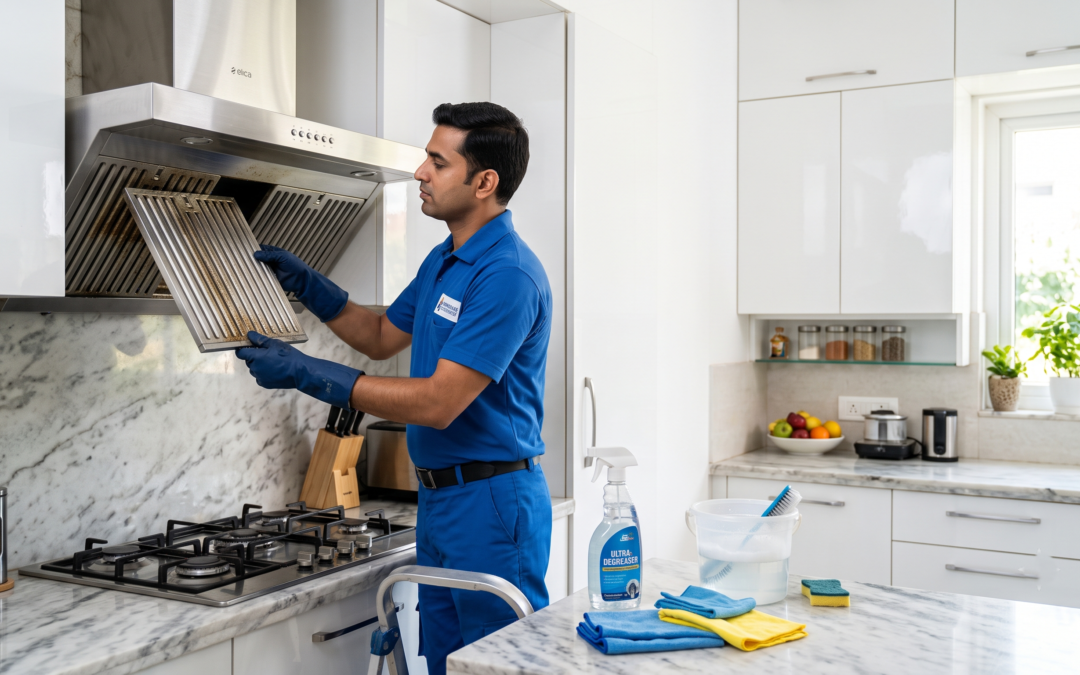
Step 2: Remove the Filters
Most chimneys have removable filters secured with clips or latches. Gently release them without forcing any components.
Refer to your appliance manual if you’re unsure about the removal process.
Step 3: Prepare a Cleaning Solution
Fill a bucket with warm water and add:
- A few drops of dishwashing liquid
- Two tablespoons of baking soda
- One cup of white vinegar
This mixture helps dissolve grease without damaging the filters.
Step 4: Soak the Filters
Place the filters in the solution for 20–30 minutes. Soaking loosens stubborn grease, making it easier to clean without excessive scrubbing.
For heavily clogged filters, replace the solution and soak for an additional 15–20 minutes if necessary.
Step 5: Gently Scrub Away Grease
Using a soft sponge or non-abrasive brush, clean both sides of each filter. Pay extra attention to the corners and edges where grease tends to accumulate.
Avoid applying excessive pressure, especially on delicate mesh filters, as they can bend or become damaged.
How to Clean Different Types of Kitchen Chimney Filters
Not all kitchen chimneys use the same filter technology. Before cleaning, it’s important to identify your chimney type, as each requires a different cleaning method. Using the wrong technique can reduce performance or even damage the filter.
The three most common types are:
- Mesh Filter Chimneys
- Baffle Filter Chimneys
- Filterless (Auto-Clean) Chimneys
Let’s look at each one in detail.
How to Clean Mesh Filters
Mesh filters are made from multiple layers of fine aluminum or stainless-steel mesh. These layers trap grease and smoke particles before they reach the motor. Because grease collects quickly between the fine layers, mesh filters need more frequent cleaning than other types.
Step 1: Remove the Filter
Carefully unlock and remove the filter according to your chimney’s instructions. Avoid bending or twisting the mesh.
Step 2: Prepare a Cleaning Solution
Fill a bucket or sink with hot (not boiling) water.
Add:
- 2 tablespoons of baking soda
- A few drops of liquid dishwashing soap
- 1 cup of white vinegar
Mix thoroughly.
Step 3: Soak the Filter
Place the filter completely in the solution for 20–30 minutes.
For heavily clogged filters, soak for up to 45 minutes.
Step 4: Scrub Gently
Use a soft nylon brush or toothbrush to clean between the mesh layers.
Never use:
- Steel wool
- Metal brushes
- Sharp objects
- Strong acids
These can permanently damage the mesh.
Step 5: Rinse Thoroughly
Wash the filter under clean running water until all detergent and grease residue are removed.
Step 6: Dry Completely
Allow the filter to air dry naturally before reinstalling it.
Installing a damp filter may encourage corrosion and reduce airflow.
Cleaning Frequency
- Heavy cooking: Every month
- Moderate cooking: Every 6–8 weeks
- Light cooking: Every 2–3 months
How to Clean Baffle Filters
Baffle filters are commonly found in Indian kitchens because they handle oily cooking better than mesh filters.
Instead of trapping grease inside a fine mesh, they use multiple curved metal plates that change the airflow direction. Grease sticks to these plates while cleaner air continues through the chimney.
Step 1: Remove the Baffle Filter
Unlock the filter carefully.
Most baffle filters are made from stainless steel, making them more durable than mesh filters.
Step 2: Soak in Hot Water
Fill a large bucket with hot water.
Add:
- Dishwashing liquid
- Baking soda
- White vinegar
Leave the filter for 30 minutes.
Step 3: Clean Each Groove
Using a soft brush, clean every channel where grease accumulates.
The curved plates often collect thick grease deposits that require extra attention.
Step 4: Wash Thoroughly
Rinse with clean water until no grease remains.
Step 5: Dry Completely
Allow the filter to dry naturally before reinstalling.
Cleaning Frequency
Every 2–3 months for average households.
Monthly cleaning is recommended if you cook oily food every day.
How to Clean Filterless (Auto-Clean) Chimneys
Filterless chimneys use centrifugal technology instead of traditional filters.
They don’t require regular filter cleaning, but they still need maintenance.
Many homeowners mistakenly believe these chimneys never need cleaning.
This is not true.
Grease still accumulates on:
- Oil collector
- Blower housing
- Inner walls
- Motor area
Cleaning the Oil Collector
Most auto-clean chimneys include a removable oil collector cup.
- Remove the collector.
- Empty the accumulated oil.
- Wash using warm water and dish soap.
- Dry completely.
- Reinstall securely.
This should be done every 2–4 weeks depending on cooking habits.
Cleaning the Exterior
Use a microfiber cloth with mild detergent.
Never spray cleaner directly onto:
- Control panel
- Switches
- LED lights
Instead, spray the cloth and wipe gently.
Cleaning the Motor Area
The motor should never be washed with water.
Instead:
- Remove loose dust using a dry microfiber cloth.
- Use a soft brush to clean accessible areas.
If excessive grease has reached the motor housing, schedule professional servicing.
How to Clean the Chimney Exterior
The outside of the chimney collects fingerprints, grease, dust, and cooking vapors.
Cleaning the exterior regularly helps maintain its appearance.
Stainless Steel Finish
Use:
- Warm water
- Mild detergent
- Soft microfiber cloth
Wipe along the grain of the steel for a streak-free finish.
Glass Chimney
For glass panels:
- Use a glass cleaner or diluted vinegar solution.
- Wipe with a lint-free cloth.
Avoid abrasive cleaners that may scratch the surface.
Cleaning the Control Panel
The touch panel and buttons are sensitive electrical components.
Never pour water directly onto them.
Instead:
- Turn off the power.
- Slightly dampen a microfiber cloth.
- Wipe gently.
- Dry immediately.
Safe DIY Kitchen Chimney Cleaning Tips
If you prefer cleaning your chimney yourself, follow these best practices:
Use Warm Water Instead of Boiling Water
Very hot water may damage certain coatings or plastic components.
Warm water is effective and safer.
Choose Mild Cleaning Products
Avoid industrial degreasers unless approved by the manufacturer.
Household ingredients like baking soda and vinegar work well for routine maintenance.
Wear Protective Gloves
Grease can be difficult to remove from skin.
Gloves also protect against sharp metal edges.
Work on a Stable Surface
If using a ladder, ensure it is stable.
Never overreach while cleaning the chimney.
Keep Electrical Parts Dry
Water entering the motor or control board can cause serious damage.
Common Kitchen Chimney Cleaning Mistakes
Many chimney problems result from improper cleaning rather than normal wear.
Avoid these common mistakes.
Using Harsh Chemicals
Strong acids and bleach can damage:
- Stainless steel
- Protective coatings
- Aluminum filters
Scrubbing Too Hard
Excessive force can bend mesh filters and reduce airflow.
Gentle cleaning is more effective.
Ignoring the Oil Collector
In auto-clean chimneys, a full oil collector can overflow and create additional grease buildup.
Reinstalling Wet Filters
Always allow filters to dry completely before reinstalling.
Moisture may cause corrosion or unpleasant odors.
Cleaning Only the Outside
A shiny exterior doesn’t mean the inside is clean.
Filters and internal grease buildup require regular attention.
Skipping Regular Maintenance
Waiting until the chimney stops working usually leads to more expensive repairs.
Routine cleaning is far more cost-effective.
Signs Your Kitchen Chimney Needs Professional Cleaning
DIY cleaning is suitable for routine maintenance.
However, certain issues require professional attention.
Contact a technician if you notice:
- Very low suction power
- Loud or unusual motor noise
- Burning smell
- Oil leaking from the chimney
- Auto-clean feature not working
- Excessive vibration
- Smoke remaining inside the kitchen
- Touch controls not responding
- Motor overheating
- Electrical sparking
- Repeated tripping of the power supply
Professional servicing includes cleaning internal components that are difficult or unsafe to access at home.
Recommended Kitchen Chimney Maintenance Schedule
| Task | Recommended Frequency |
|---|---|
| Wipe exterior | Weekly |
| Clean touch panel | Weekly |
| Empty oil collector (Auto-Clean) | Every 2–4 weeks |
| Clean mesh filter | Every 1–2 months |
| Clean baffle filter | Every 2–3 months |
| Inspect duct pipe | Every 6 months |
| Professional deep cleaning | Every 6–12 months |
| Complete service inspection | Once a year |
Following this schedule helps maintain strong suction, reduces grease buildup, and extends the life of your chimney.
Why Regular Maintenance Matters
A clean kitchen chimney isn’t just about appearance—it directly affects your kitchen’s air quality, appliance efficiency, and long-term reliability. Regular cleaning reduces strain on the motor, improves smoke extraction, minimizes unpleasant odors, and helps prevent expensive repairs caused by excessive grease buildup.
By combining routine DIY maintenance with periodic professional servicing, you can keep your chimney performing at its best for years.
Conclusion
Keeping your kitchen chimney clean is one of the easiest ways to maintain a healthy cooking environment and extend the life of your appliance. Whether you have a mesh filter, baffle filter, or filterless auto-clean chimney, regular maintenance improves suction performance, reduces grease buildup, minimizes odors, and helps prevent costly repairs.
While many routine cleaning tasks can be performed at home using safe DIY methods, some issues require professional expertise. If your chimney has low suction, excessive noise, oil leakage, electrical problems, or the auto-clean function isn’t working properly, it’s best to have it inspected by an experienced technician.
A well-maintained kitchen chimney not only keeps your kitchen cleaner but also ensures efficient ventilation, allowing you to cook comfortably every day.
Why Choose Pink City Service Center for Kitchen Chimney Cleaning in Jaipur?
If you’re looking for reliable kitchen chimney cleaning or repair services in Jaipur, Pink City Service Center offers professional solutions for a wide range of chimney brands and models.
Our Services Include
- Kitchen chimney deep cleaning
- Chimney repair and troubleshooting
- Chimney motor repair and replacement
- Filter cleaning and replacement
- PCB and switch panel repair
- Suction problem diagnosis
- Auto-clean chimney servicing
- Installation and uninstallation
- Preventive maintenance
- Annual maintenance support
Why Customers Choose Us
- Experienced technicians
- Same-day service (subject to availability)
- Transparent pricing
- Genuine-quality replacement parts where required
- Service for multiple chimney brands
- Home service across Jaipur
- Professional diagnosis before repair
- Customer-focused support
Note: Pink City Service Center is an independent appliance repair and maintenance provider. We are not an authorized service center for Glen, Elica, Faber, Kaff, or other brands mentioned in this article.
Is your kitchen chimney losing suction, making unusual noise, or overdue for cleaning?
Don’t wait until grease buildup leads to expensive repairs.
Book a professional kitchen chimney inspection and cleaning service with Pink City Service Center to keep your chimney running efficiently and your kitchen fresh.
Our experienced technicians provide reliable home service across Jaipur for cleaning, maintenance, and repairs on a wide range of kitchen chimney models.
Frequently Asked Questions (FAQs)
How often should I clean my kitchen chimney?
For most households, cleaning every 2–3 months is sufficient. If you cook oily or fried food daily, monthly cleaning is recommended.
Can I clean my kitchen chimney myself?
Yes. Routine cleaning of filters, the exterior, and the oil collector can usually be done at home using mild detergent, warm water, baking soda, and vinegar. Always disconnect the power before cleaning.
Which filter is easier to maintain: mesh or baffle?
Baffle filters are generally easier to clean and are better suited for Indian cooking because they handle grease more effectively than mesh filters.
Do filterless chimneys require cleaning?
Yes. Although they don’t have traditional filters, the oil collector, blower area, and inner surfaces still require regular maintenance.
What should I do if my chimney has low suction?
First, clean the filters and check for visible blockages. If suction doesn’t improve, the motor, duct, or internal components may need professional inspection.
Is baking soda safe for cleaning chimney filters?
Yes. Baking soda is a gentle cleaner that helps loosen grease when combined with warm water and dishwashing liquid. It is suitable for routine filter cleaning.
Can I use strong chemicals to remove grease?
It’s best to avoid harsh chemicals, bleach, or abrasive cleaners. Mild household cleaning solutions are safer for most chimney surfaces and filters.
How long does professional chimney cleaning take?
The time depends on the chimney’s condition, but a standard professional cleaning typically takes 45–90 minutes.
Why is my kitchen chimney making loud noise?
Common causes include dirty filters, grease buildup, loose parts, blocked airflow, or motor issues. Persistent noise should be inspected by a qualified technician.
How can I increase the lifespan of my kitchen chimney?
Regular filter cleaning, periodic deep cleaning, proper usage, and annual servicing can significantly improve your chimney’s performance and lifespan.
For most households, cleaning every 2–3 months is sufficient. If you cook oily or fried food daily, monthly cleaning is recommended.
Yes. Routine cleaning of filters, the exterior, and the oil collector can usually be done at home using mild detergent, warm water, baking soda, and vinegar. Always disconnect the power before cleaning.
Baffle filters are generally easier to clean and are better suited for Indian cooking because they handle grease more effectively than mesh filters.
Yes. Although they don’t have traditional filters, the oil collector, blower area, and inner surfaces still require regular maintenance.
First, clean the filters and check for visible blockages. If suction doesn’t improve, the motor, duct, or internal components may need professional inspection.
Yes. Baking soda is a gentle cleaner that helps loosen grease when combined with warm water and dishwashing liquid. It is suitable for routine filter cleaning.
It’s best to avoid harsh chemicals, bleach, or abrasive cleaners. Mild household cleaning solutions are safer for most chimney surfaces and filters.
The time depends on the chimney’s condition, but a standard professional cleaning typically takes 45–90 minutes.
Common causes include dirty filters, grease buildup, loose parts, blocked airflow, or motor issues. Persistent noise should be inspected by a qualified technician.
Regular filter cleaning, periodic deep cleaning, proper usage, and annual servicing can significantly improve your chimney’s performance and lifespan.